







Jacob Thyssen
Founder
Client: Becker.dk
Industry: Auto Parts (E-commerce)
Market: Denmark
Business goal:
Scale revenue and profitability by pushing the right products at the right time.
Real objective:
Make Google Ads profitable and scalable despite extreme complexity from a 800,000+ product catalog.
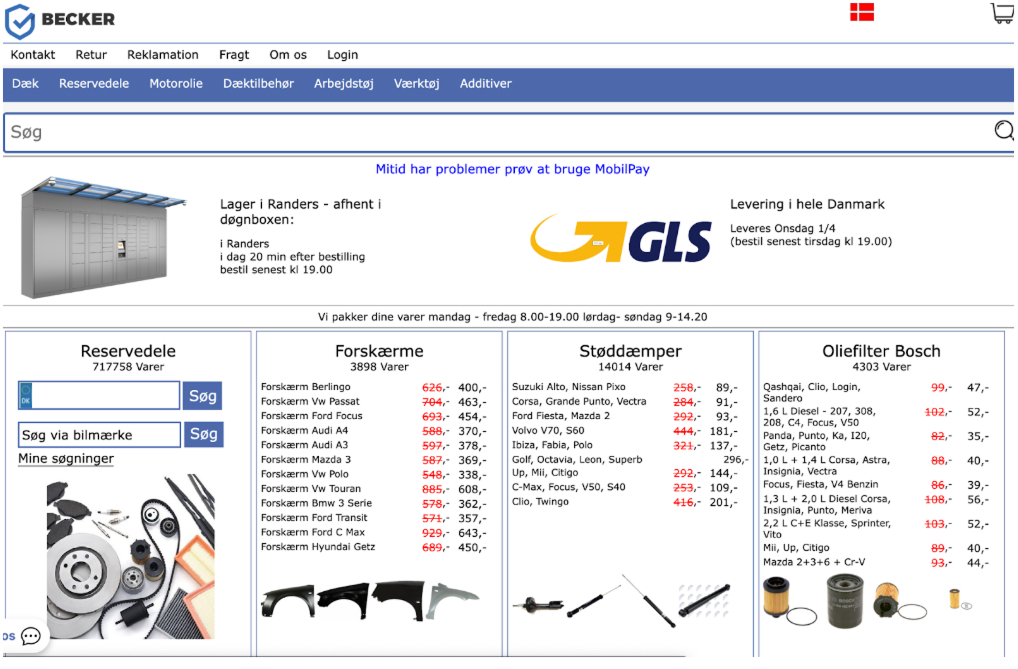
Becker.dk had over 800,000 products active in Google Ads.
The problem was not traffic.
The problem was not demand.
The problem was:
How do you stay profitable when everything is competing for budget?
The Gap: Volume ≠ Profitability
Revenue existed, but:
Reality Check
Google Ads was contributing — but it was not the primary growth driver.
With the right structure, Becker.dk could:
Primary Objective:
Build a system that:
Scales revenue without sacrificing efficiency
Most accounts don’t fail because of lack of demand.
They fail because everything is treated the same.
Before working together, growth was limited by:
– No control across a massive product catalog
– No prioritization of profitable products
Barrier 1: No Product Prioritization
Symptom:
800,000+ products competing equally
Impact:
Budget diluted → profitable products underfunded
Barrier 2: Misalignment with Search Behavior
Symptom:
Product titles didn’t reflect how people actually search
Impact:
Missed high-intent searches → lower CTR and conversions
Barrier 3: Weak Search Structure
Symptom:
Broad targeting with limited segmentation
Impact:
Low control → inefficient spend
Personal Note:
If you don’t decide where the budget goes, Google will.
Instead of “optimizing campaigns,”
we built a system around profitability, control, and relevance.
1. Product Prioritization at Scale
We structured 800,000+ products based on:
This allowed us to:
2. Search-Driven Feed Optimization
Key insight:
People don’t search:
“brake disc”
They search:
“brake disc BMW 3 series 2018”
So we:
Result:
3. SKAG-Based Search Structure
We rebuilt search using single keyword ad groups:
Before:
After:
We:
We didn’t try to control everything.
We controlled what mattered.
Structured 800,000+ products into performance-based segments
Shifted budget toward profitable SKUs
Reduced spend on low-performing areas
Push what works. Cut what doesn’t.
| KPI | Before | After | Impact |
|---|---|---|---|
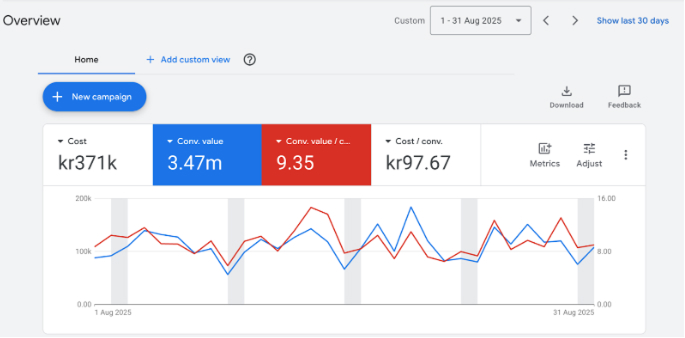
| Google Ads Revenue | €100,000/month | €400,000+/month | 4x growth |
| ROAS | 6.0 | 9.35 | +56% |
| Product Efficiency | Uncontrolled | Structured | Better scaling |
| Search Relevance | Low | High | Higher conversions |
Google Ads became a primary revenue driver
Revenue scaled without losing profitability
Budget allocation became controlled and intentional
Scaling became predictable
Most accounts never scale profitably.
Not because of lack of products.
Not because of lack of demand.
Because:
If you manage a large product catalog and Google Ads feels harder to scale than it should, the issue is rarely the number of products.
It usually comes down to prioritisation and structure.
Co-founder of Pandora CWE
I came across Thyssen Ads through Jacob’s early ambition and bold vision. What impressed me most was how quickly that vision translated into execution. The team operates with a rare level of energy, precision, and commitment to results.
Head of Group Marketing, Flatpay
Strong Google Ads profile: Good energy and a strong, targeted approach to Google Ads and YouTube. Brought a lot of interesting takes to the table and was great at creating urgency on our behalf. Can clearly be recommended.
CEO, Bambox
We have been working with Thyssen Ads for more than three years. Thyssen Ads has delivered great results, with a ROAS much higher than we had imagined. We highly recommend Thyssen Ads to anyone with a webshop.
CEO, ION18 & MIQ World
My organizations MIQ World and ION18 has used Thyssen Ads to effectively market our business and drive membership growth. Thyssen Ads are highly professional and competent – I appreciate their creative approach and good communication skills.
CEO, Becker.dk
Thyssen Ads stands out for their professionalism and commitment. From day one, we felt confident that our business was in the right hands
Founder Oh Yes
Highly Recommended!
We’ve worked with multiple marketing agencies, but Thyssen Ads is the first to deliver truly measurable results. Their communication is sharp, their execution is consistent, and their focus on performance is clear in everything they do.
What sets them apart is their Tracking-first approach. Even with a limited budget, they’ve helped us unlock growth we didn’t think was possible
What truly sets them apart is their unique, Google-first strategy, which has been incredibly effective—even for a small company like ours with limited marketing resources. Thanks to their expertise, we’ve achieved growth we didn’t think was possible.
If you’re looking for a marketing partner that delivers real impact, we highly recommend Thyssen Ads!