








Benjamin Fischer-Henrichsen
Founder
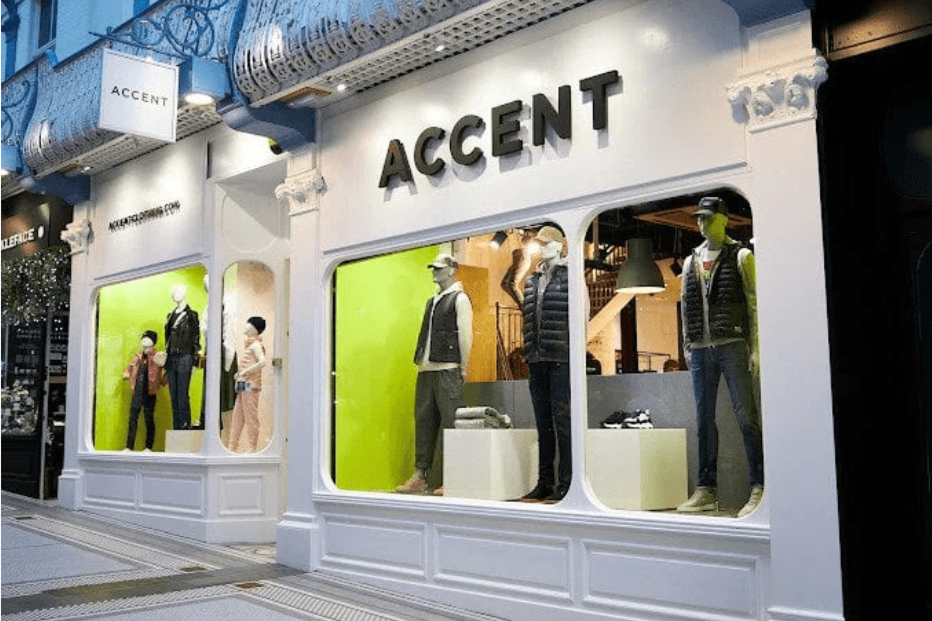
Client: Accent Clothing
Industry: Fashion (Luxury / Multi-brand Retail)
Market: UK
Business goal:
Scale revenue and profitability in a highly competitive fashion market by pushing the right products at the right time.
Real objective:
Stop wasting spend on underperforming products and build a system that only scales what is competitive and profitable.
Accent Clothing came to us with unstable and inefficient Google Ads performance.
They were heavily reliant on:
The issue:
Performance was judged at brand level — not product level.
Which created:
Result:
Reality Check
Google Ads was running —
but it was not a controlled growth channel.
In a market like UK fashion:
Competitors constantly adjust pricing
Margins are tight
Demand is fragmented
Without structure → you lose.
Primary Objective:
Build a system that:
Personal Note:
In fashion, you’re not competing on brand.
You’re competing on product, price, and timing.
Before working together, growth was limited by:
– Brand-based structure hiding real performance
– No control over which products were actually being scaled
Barrier 1: Poor Structure (Brand-Level Thinking)
Symptom:
Campaigns structured by brand instead of product performance
Impact:
Budget allocated incorrectly → strong products ignored
Barrier 2: No Competitive Filtering
Symptom:
Products pushed regardless of price competitiveness
Impact:
Spending on products that couldn’t win → low ROAS
Personal Note:
If you don’t control what products you push, you’re just funding your competitors.
Instead of letting Google decide what to push,
we took control over what deserves to scale.
1. Product-Level Prioritization
We moved away from brand structure and focused on:
Campaigns were built around:
2. Competitive Positioning as a Core Filter
In this market, one rule applies:
If you’re not competitive — you don’t scale.
We:
3. Margin-Based Scaling
We didn’t just scale revenue.
We scaled:
4. Dynamic Product Control
Using tools like PriceShape and data-driven processes, we:
Google doesn’t know your margins.
It doesn’t know your competitiveness.
You have to tell it.
Only scale what can win.
| KPI | Before | After | Impact |
|---|---|---|---|
| Google Ads Revenue | £26,000/month (~€30,000) | ~£193,000/month (~€224,000) | +642% |
| ROAS | ~1.95 | 8.37 | +330% |
| Product Efficiency | Brand-based | Product-based | Better allocation |
| Profitability | Unstable | Controlled | Scalable growth |
Most multibrands fail on Google Ads.
Not because of lack of products.
Not because of lack of demand.
Because:
If you are already investing in Google Ads and feel there is more potential, but performance depends too much on what gets budget, the issue often comes down to allocation.
From our experience, the biggest performance gains come from improving how the budget is distributed. When spend supports the products that truly drive results, growth becomes much easier to sustain.
Co-founder of Pandora CWE
I came across Thyssen Ads through Jacob’s early ambition and bold vision. What impressed me most was how quickly that vision translated into execution. The team operates with a rare level of energy, precision, and commitment to results.
Head of Group Marketing, Flatpay
Strong Google Ads profile: Good energy and a strong, targeted approach to Google Ads and YouTube. Brought a lot of interesting takes to the table and was great at creating urgency on our behalf. Can clearly be recommended.
CEO, Bambox
We have been working with Thyssen Ads for more than three years. Thyssen Ads has delivered great results, with a ROAS much higher than we had imagined. We highly recommend Thyssen Ads to anyone with a webshop.
CEO, ION18 & MIQ World
My organizations MIQ World and ION18 has used Thyssen Ads to effectively market our business and drive membership growth. Thyssen Ads are highly professional and competent – I appreciate their creative approach and good communication skills.
CEO, Becker.dk
Thyssen Ads stands out for their professionalism and commitment. From day one, we felt confident that our business was in the right hands
Founder Oh Yes
Highly Recommended!
We’ve worked with multiple marketing agencies, but Thyssen Ads is the first to deliver truly measurable results. Their communication is sharp, their execution is consistent, and their focus on performance is clear in everything they do.
What sets them apart is their Tracking-first approach. Even with a limited budget, they’ve helped us unlock growth we didn’t think was possible
What truly sets them apart is their unique, Google-first strategy, which has been incredibly effective—even for a small company like ours with limited marketing resources. Thanks to their expertise, we’ve achieved growth we didn’t think was possible.
If you’re looking for a marketing partner that delivers real impact, we highly recommend Thyssen Ads!